Financial fears: what we're actually afraid of when it comes to money (and how we got past it)
By tuck. · Published · Last updated
We looked honestly at the money fears most of us share, where they come from, and the small habits that actually help us feel back in control.
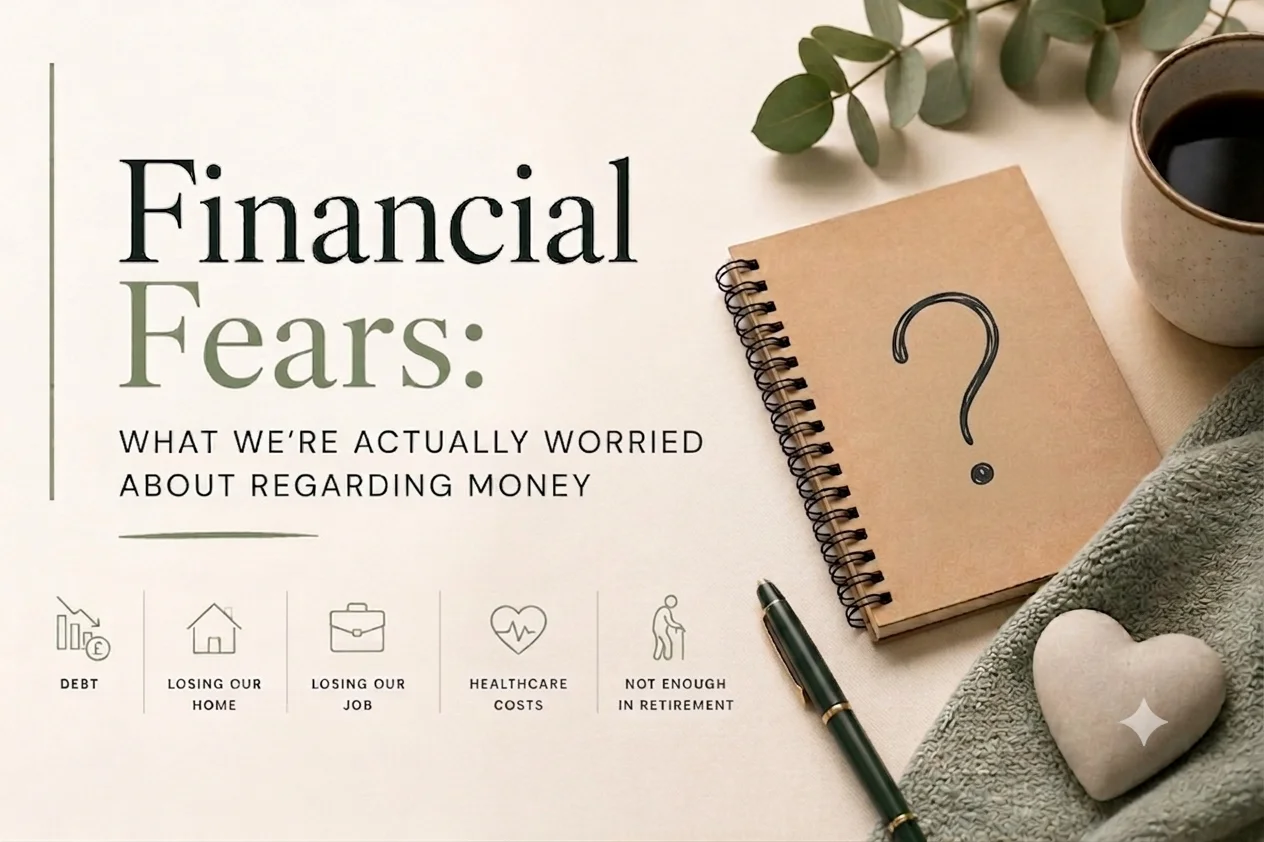
Most of us have a money fear we have never said out loud. It might be the dread of checking a bank balance, the worry of falling behind everyone else, or the quiet panic of not knowing what we would do if something went wrong tomorrow.
These money fears are far more common than they feel in the moment, and they rarely come from being bad with money. They come from a system that has made managing money genuinely harder in recent years. We wanted to look honestly at what we are actually afraid of, where that fear tends to come from, and what has genuinely helped us feel more in control.
Why money fear feels different from other worries
Money touches almost everything, from where we live to how we spend our evenings, so when it feels uncertain, that uncertainty tends to spread. Unlike other worries, money fear often comes with shame attached, which is exactly why so few people talk about it openly.
That silence is part of the problem. When everyone keeps their financial stress private, it is easy to assume everyone else has it figured out. In reality, surveys consistently show that money is one of the top sources of stress for UK adults, across income levels.
The fears that keep coming up
Running out of money before payday
This is one of the most common fears we hear about, and it is rarely about overspending on luxuries. More often it is the slow creep of everyday costs, a supermarket shop, fuel, a school trip, adding up faster than expected.
Not having anything saved for emergencies
Knowing there is no buffer if the car breaks down or a bill arrives unexpectedly is one of the most persistent sources of anxiety. It is less about the amount needed and more about the feeling of having no safety net at all.
Comparing ourselves to others
Social media has made other people's spending visible in a way it never used to be, and it is easy to feel behind when a holiday, a renovation or a new car appears in a feed. Most of the time, we are comparing our full financial picture to someone else's highlight reel.
Losing track of spending
For a lot of people, the fear is not a big number, it is simply not knowing. Not checking an app, not opening a statement, not adding it up. Avoidance feels protective in the moment, but it tends to make the underlying worry grow rather than shrink.
Where the anxiety actually comes from
It would be easy to put all of this down to individual habits, but the wider picture matters too. The cost of living has risen faster than wages for a sustained period, and that squeeze is real, not imagined. We are not here to wade into politics, but it is worth saying plainly: if money feels harder than it used to, that is because for many households, it genuinely is.
Understanding that context does not fix the bank balance, but it does take away some of the shame. Financial anxiety is very often a sensible response to a genuinely difficult set of conditions, not a personal failing.
What we're each afraid of (and how we got past it)
Money fear rarely looks the same for two people, even when the underlying anxiety is identical. We asked around the team for the fear that sits with them most, and what actually moved the needle.
The student loan that never seems to shrink
“My fear is opening the student loan statement and seeing the balance has barely moved, even though I have been paying into it for years. It made me feel like I was running in place. What helped was stopping checking the total and focusing on the monthly repayment instead, since that is the number that actually affects my day to day budget. I also automated a small separate savings pot so the loan stopped feeling like the only thing my money was going towards.”
Dhruv: tuck. Co-Founder & COO
The same student loan, a different fear
"For me it was less about the balance and more about not understanding the terms properly, when it gets written off, how interest is calculated, what happens if my income changes. The fear was really about not knowing. There was also a real lack of information about how my financial circumstances meant I was given a higher loan amount at 18, and I wish I'd known more about that at the time, because I would have tried to reduce the amount I was given. So I sat down one evening and actually read the full breakdown on the student finance website, and just having the facts in front of me took most of the panic out of it. Now I check it once a year, on a set date.
Olivia: Customer Insight Executive
Building a future for your children
“My biggest fear is not being able to give my daughter the upbringing I want for her, the things that cost money, the experiences, the security if anything ever happened to me. That one kept me up more than any of my own spending worries. What helped was setting up a small junior savings account and a simple life insurance policy early on, even at a modest amount, so there is something in place regardless of what happens. It will not cover everything, but it took the all or nothing pressure off.”
Neel: tuck. Co-founder & CEO
The struggle of wanting to work hard just to worry about spending it
"My fear isn't really about not having money, it's about working hard and then not actually getting to enjoy it - travelling, days out, holidays with my partner and kids, without spending the whole time doing mental maths about whether we can afford it. That's tied into the other one for me too: saving for 'one day'. I'm only 33, so retirement still feels miles away, but I know that's exactly the trap - it creeps up on you if you don't start early. What's helped is that my partner and I put money into a few investments early on, so it's working away in the background without us having to think about it constantly. It doesn't mean every outing is stress-free, but it's taken the edge off both fears at once - we're not choosing between enjoying life now and preparing for later, we're doing a bit of both."
Bianca: Head of Marketing
The buy now, pay later trap
“I used buy now, pay later for what felt like small, manageable purchases, until I added them up one month and realised I had four separate repayment schedules running at once. None of them felt like real debt in the moment, which was exactly the problem. What helped was writing every active plan down in one place so I could see the total, then paying them off one at a time before allowing myself to use it again. I still use it occasionally, just never more than one plan running concurrently.”
Sharva: Social Media Executive
Five different fears, four different fixes, but the same pattern underneath each one: naming the actual number, whatever it was, took away far more anxiety than ignoring it ever did.
What actually helps
Naming the number
The single biggest relief tends to come from simply looking. Sitting down with bank statements, even for twenty minutes, and writing out what is coming in and what is going out usually makes things feel more manageable than the vague dread did. Uncertainty is almost always worse than the reality.
Small, visible savings
A small automated transfer on payday, even ten or twenty pounds, builds a habit faster than waiting until there is a large amount spare. Seeing a savings pot grow, however slowly, does more for confidence than the actual total suggests.
Building a buffer, not a fortress
A starting emergency fund does not need to cover six months of expenses to be useful. Even a few hundred pounds set aside changes how a single unexpected bill feels. If loyalty schemes are part of your wider routine, our tuck. blog page, which covers how they fit alongside cashback without doing all the heavy lifting on their own.
Letting cashback do quiet work in the background
One of the easiest changes is making the spending you were already going to do work a little harder. Buying a Tesco cashback card or Asda cashback card before the weekly shop, or a Boots cashback card before a pharmacy or beauty run, means a percentage comes back on spending that was happening anyway. It will not fix financial anxiety on its own, but it is a small, consistent habit that quietly works in your favour rather than against it.
A different relationship with money
None of this makes money stress disappear overnight, and it would be dishonest to pretend it does. But fear tends to lose some of its grip the moment it is named, tracked and given a small plan to sit alongside it.
If you are looking for more practical, low-effort ways to build that habit, our ‘eco-friendly money saving tips’ article and ‘7 ways to cut your weekly grocery bill using cashback’ are both good places to start.